
Understanding Hand Protection: Why All Gloves Aren’t Created Equal
How to select the correct glove – When it comes to hand protection, not all gloves offer the same level of safety—simply put, “gloves aren’t just gloves.” This FAQ provides a clear overview of glove standards and performance ratings, including cut and abrasion resistance. Selecting the appropriate glove based on the mechanical risks present in your workplace is essential to ensure optimal hand protection and reduce the risk of injury.

What is the Australian Standards for Hand Protection ?
The Australian / NZ Standard is AS/NZS 2161.
Historically, when developing and updating many Australian & New Zealand Standards (AS/NZS) for hand protection,
Standards Australia have turned to their European (CE) counterparts and have adopted their standards for Australia.
What is the current European (CE) Standard?
The current Standard is EN 388:2016 which replaced the old standard EN 388:2003.
Why was the new standard adopted?
The EN 388:2016 standard replaced this system with a more precise testing method using the ISO 13997 test. In this updated system, cut resistance is rated on a different scale (A through F) which provides a more accurate measurement of cut resistance when it comes to hand protection.
What does the standard cover?
The standard evaluates gloves based on their performance against abrasion, cut, tear, puncture, and impact, ensuring that users can select the appropriate hand protection for various industrial and occupational hazards. Following EN388 guidelines ensures that both manufacturers and users can have confidence in the reliability and safety of their hands whilst carrying out work.
What are the world wide standards to evaluate protection levels of gloves ?
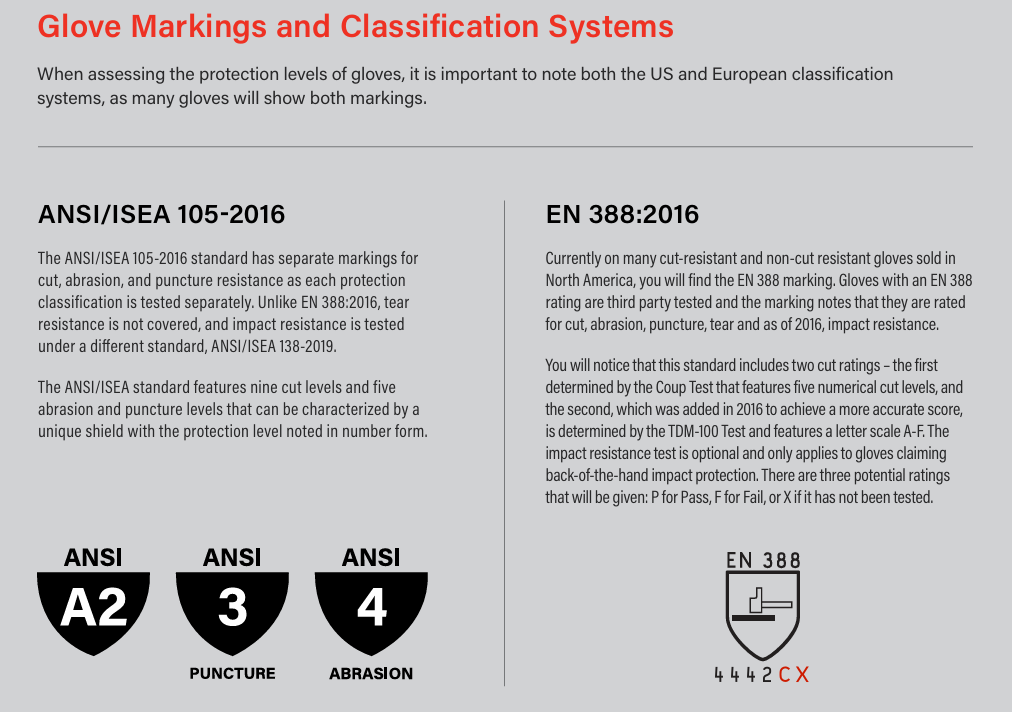
There are two standards used worldwide to evaluate the protection levels of work
gloves: ANSI/ISEA 105-2016, the US Standard developed in tandem by the
American National Safety Institute (ANSI) and International Safety Equipment
Association (ISEA) and EN 388:2016, the European Standard. Each standard
has established testing methods for cut, abrasion, puncture, and tear resistance.
Although both standards ensure that the wearer is protected against the same
mechanical risks, they are not equivalent and cannot be compared as such.
Understanding the ISO 13997 Test Method (TDM-100 Test) for Superior Cut Protection
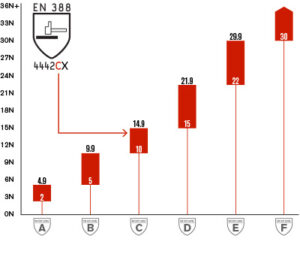
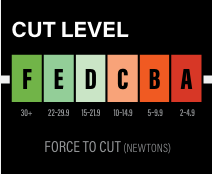
To differentiate between the two cut scores that are generated under the EN 388 2016 standard, the cut score achieved using the ISO 13997 test method has a letter added to the end of the first four digits. The letter assigned is dependent upon the result of the test, which is given in Newtons. The table to the left outsides the alpha scale used to calculate the results from the ISO 13997 test method.
Why are there 2 methods of testing for Cut ratings for Gloves?
The most distinct component to the EN 388 2016 standard is the formal inclusion of the ISO 13997 cut test method. ISO 13997, also known as the “TDM-100 Test”, is similar to the ASTM F2992-15 test method used in the ANSI 105 standard. Both standards make use of the TDM machine with the sliding blade and weights. After many years of using differing testing methods for hand protection, it was discovered that the blade in the “Coup Test” would dull quickly when testing yarns with high levels of glass and steel fibers. This led to unreliable cut scores, highlighting the need for the inclusion of the “TDM-100 Test” to incorporate the EN 388 standard to ensure more accurate hand protection assessments.

What does a Cut Rating of A mean?
Cut Rated A Gloves can withstand a cutting force of 2 – 4.9 newtons (204 – 508 grams)
This is the lowest cut resistance level and indicates that the gloves offer basic protection against cuts and abrasions.
What does a Cut Rating of B mean ?
Cut Rated B Gloves can withstand a cutting force of 5 – 9.9 newtons (509 – 1019 grams)
This level of protection is suitable for tasks that involve a moderate risk of cuts and abrasions, offering more durability and safety than Level A gloves.
What does a Cut Rating of C mean ?
Cut Rated C Gloves can withstand a cutting force of 10 – 14.9 newtons (1020 – 1529 grams). These gloves are suitable for tasks with a higher risk of cuts and abrasions. They are commonly used in industries such as manufacturing, construction, and logistics, where handling sharp materials or tools is common.
What does a Cut Rating of D mean ?
Cut rated D Gloves can withstand a cutting force of 15 – 21.9 newtons (1530 – 2242 grams). This level of cut resistance is suitable for tasks involving a significant risk of cuts and abrasions, such as handling sharp-edged materials, tools, or machinery
What does a Cut Rating of E mean ?
Cut Rated E Gloves can withstand a cutting force of 22 – 29.9 newtons (2243 – 3058 grams) . This level of protection is often used in industries where workers are exposed to sharp objects or high-risk environments, such as heavy manufacturing, construction, or metal handling.
What does a Cut Rating of F mean ?
Cut Rated F Gloves can withstand a cutting force of 30+ newtons (3059+ grams).
These gloves are designed for tasks with the highest risk of cuts and lacerations, such as handling very sharp tools or materials. They are typically used in industries where extreme cut protection is required, such as in heavy manufacturing, metal processing, or other high-risk environments.
How do I know what gloves are rated to by looking at the glove?
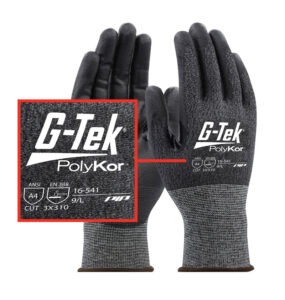
When it comes to hand protection, the cut rating indicates the level of cut resistance the gloves provide, and it’s typically represented by a standardized rating system. For gloves to be compliant with Australian standards, they need to be tested and certified according to these standards, and their cut resistance should be clearly marked on the glove or its packaging. Each test result contributes to the overall EN 388 glove rating, shown on the right as five digits (e.g., 4 3 4 2 X), where each digit corresponds to a specific test in this order:
Abrasion – Cut (Coup) – Tear – Puncture – (optional) ISO Cut or Impact Protection
If you’re sourcing or using cut-resistant gloves, look for the relevant cut rating logo or label, which ensures that the gloves meet the necessary safety requirements for your specific application.
How is the Coup Test performed ?
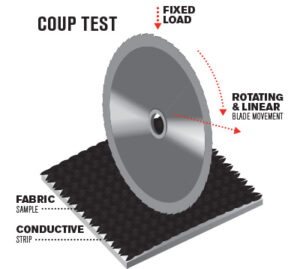
The Coup Test is conducted using a circular blade that rotates in cycles and moves back and forth along the same piece of material until the material is cut through. The test uses the same amount of force on all samples. Materials that achieve a higher cut score will contribute to the dulling of the blade.
Test Method: EN 388:2016

How is Abrasion testing carried out and measured ?
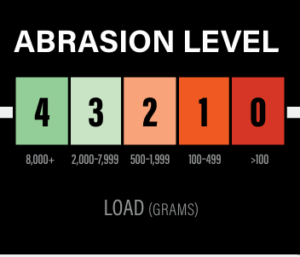
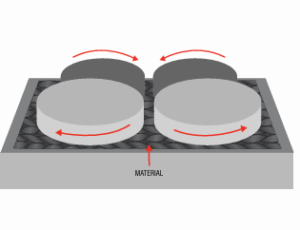
The Martindale Test uses a similar rotating disc to the Taber Test that rubs the fabric in a figure eight motion. The number of cycles that the fabric can endure before it shows noticeable wear determines the abrasion rating.
How is Tear Resistance calculated
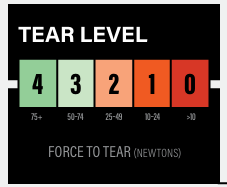
The EN388 Tear Resistance Test is measured by testing the tensile strength of a glove by applying force to four separate tear points on the fabric. The force is increased until the material is torn. The amount of force used to tear the material is recorded and categorized on a 1–4 scale.

How is Puncture testing performed.
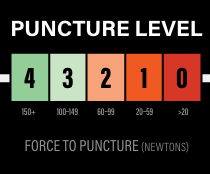
The Blunt Force Puncture Testing uses a 4.5mm probe, resembling a ballpoint pen, at a 90-degree angle to simulate a tear or burst hazard. The test measures the amount of force needed for a blunt probe to pierce through PPE material at a rate of 100mm per minute.
Test Method: EN 388:2016
How is Impact Protection Test performed?
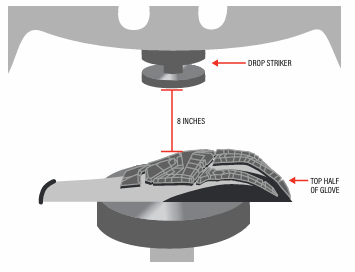
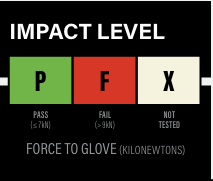
This test is intended for work gloves designed for optimal hand protection against impact. Gloves that don’t offer impact protection, will not be subjected to this test.
The sample is cut open and laid out flat over a raised anvil. A 2.5kg striker
force is dropped on the knuckles at an impact force of 5 joules. If the average
transmitted force is less than or equal to 7kN, the gloves will be marked P for
Pass. If the average transmitted force is higher than 9kN, the gloves will be
marked F for Fail. Gloves that have not been tested will be marked X.


How is TDM-100 Cut Testing performed?
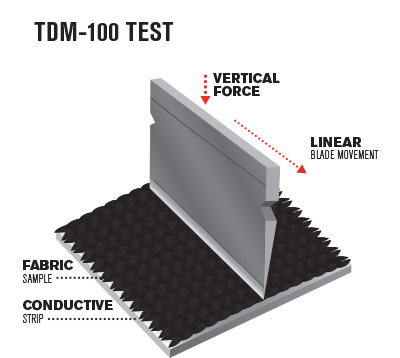
The sample is cut by a straight-edge blade, under a specific weight load that
moves along a straight path. The sample is cut five times at three different
weight loads, referred to as a cutting force, with a new size blade — short,
medium, and long — for each load, providing 15 data-points. The cutting
force is then used to determine the appropriate cut level.
Explore Our Blog: “Gloves Aren’t Just Gloves”
Discover our latest blog post, “Gloves Aren’t Just Gloves,” where we outline recommendations for selecting the right glove for the right application and environment. Learn about the innovative PosiGrip MatX range and PolyKor® technology from PIP, designed to enhance hand protection across a variety of workplace conditions.